
Summary
- Season Dates: The 2026 turtle nesting season is officially underway, running from March 1 to August 31.
- Protected Status: All five sea turtle species in T&T (Leatherback, Green, Hawksbill, Loggerhead, and Olive Ridley) are legally protected as Environmentally Sensitive Species (ESS).
- Declining Numbers: Authorities are concerned about a sharp drop in nesting figures; for example, nests at Grande Riviere fell to just 1,683 in 2025.
- Permits Required: Matura, Fishing Pond, and Grande Riviere are Prohibited Areas; visitors must obtain a permit from the Forestry Division to access these beaches.
- Heavy Penalties: Violating protection guidelines—such as driving on beaches, touching turtles, or using bright lights—can result in fines up to $100,000 and two years in prison.
By Sue-Ann Wayow
THE 2026 turtle nesting season officially began on March 1 and will run until August 31.
The Environmental Management Authority (EMA) and the Ministry of Agriculture and Fisheries issuedmedia releases on Thursday.
This year is especially crucial for leatherback turtles due to recent declines in nesting numbers and increasing ecological pressures. All five sea turtle species found in Trinidad and Tobago—Leatherback, Green, Hawksbill, Loggerhead, and Olive Ridley—are legally protected as Environmentally Sensitive Species (ESS), the releases stated.

EMA’s Deputy Chairman Neeala Mongroo said, “When the leatherback turtles return to our shores each year, it is one of nature’s most powerful reminders that Trinidad and Tobago has been entrusted with protecting a global natural treasure. The EMA remains unwavering in its commitment to safeguard these magnificent creatures and ensure that this remarkable cycle of life continues for generations to come.”
Nesting Declines Recent turtle nesting figures released by the EMA highlight a concerning decline:
- Grande Riviere: Nests increased from 2,985 in 2008 to 5,361 in 2018, with peaks of 6,113 (2016) and 6,447 (2017). However, the 2025 count fell to just 1,683, likely due to reduced patrols and monitoring.
- Matura/Nature Seekers: Historical nesting rose from 1,607 in 2008 to 3,545 in 2018, peaking at 5,749 in 2017. Recent counts show 5,219 nests in 2023, declining to 2,722 in 2025.
- Fishing Pond: Nesting remained largely stable after 2016, despite earlier fluctuations, including a drop to 493 in 2010 and a peak of 3,779 in 2014.

The EMA stated these trends highlight the urgent need for sustained monitoring, community involvement, and coordinated conservation efforts to ensure population recovery.
Key Nesting Sites for 2026:
- Trinidad: Grande Riviere, Matura, Fishing Pond, Las Cuevas, Blanchisseuse, Yarra, and Toco.
- Tobago: Stonehaven Bay (Grafton), Mount Irvine Bay, and Englishman’s Bay.
Matura, Fishing Pond, and Grande Riviere are declared Prohibited Areas under the Forests Act. Visitors must obtain permission from the Forestry Division to access these beaches for turtle viewing. The EMA highly encourages the use of trained guides to ensure safe, responsible, and memorable viewing experiences.
The EMA also acknowledged the continued commitment of state agencies, NGOs, community groups, and the Ministry of Defence for their focused enforcement to protect turtles during the nesting season.
Guidelines for Responsible Turtle Viewing:
- Do not drive on nesting beaches.
- Maintain a safe distance (up to 20 metres) from nesting turtles.
- Wear dark clothing; avoid bright lights or flash photography.
- Do not litter, dig holes, or leave objects behind.
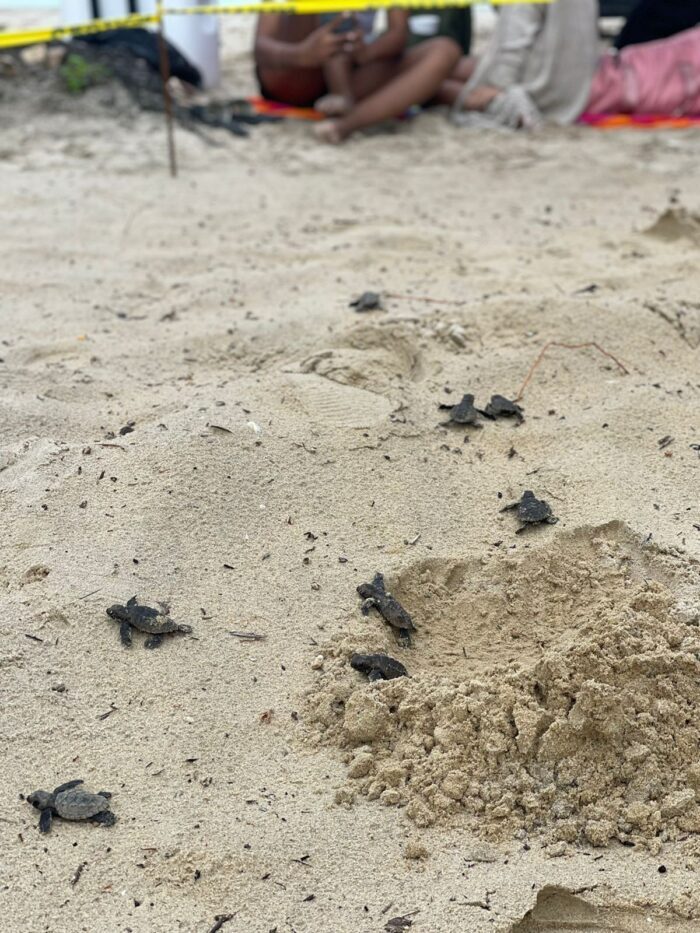
- Do not touch turtles or hatchlings, or obstruct their path to the sea.
The Ministry of Agriculture and Fisheries echoed the EMA’s guidelines, adding that the public must refrain from biking, building sandcastles, or mining beach sand. They also warned against using flambeaus, beach fires, headlights, or any bright lights along the shoreline.
“Such activities can disorient sea turtles, leading to potential abandonment of nesting sites or disorientation of hatchlings,” the ministry stated.
To ensure the protection of sea turtles, the public is strictly warned against sitting on turtles, as this can cause fatal damage to their internal organs. Citizens are also urged to reduce marine debris, such as plastics and fishing gear, to prevent the entanglement of sea turtles, and are encouraged to participate in coastal clean-up efforts.
Penalties and Reporting Violations under the Environmental Management Act (Chap. 35:05) may result in fines up to $100,000 and two years’ imprisonment. Breaches can be reported to:
- TTPS
- EMA Hotline (WhatsApp only): 367-8824
- Email: complaints@ema.co.tt
- Phone: 226-4EMA (4362) Ext. 5
- After-hours environmental emergencies: 680-9588
Where to Obtain Beach Permits:
| Office Location | Address | Contact Number(s) |
|---|---|---|
| Forestry Division (St. James) | Long Circular Road, St. James | 225-3861 |
| Forestry Division (South) | Pleasantville, San Fernando | 225-3777 / 3774 / 3772 |
| Forestry Division (East) | Damarie Hill, Sangre Grande | 225-3728 |
| Forestry Office (Rio Claro) | Rio Claro | 225-3743 |
| District Revenue Office | Chaguanas | 671-4773 |
| District Revenue Office | Tunapuna | 662-2797 |