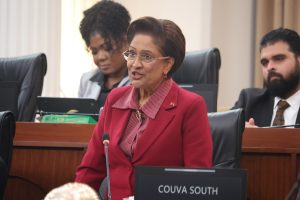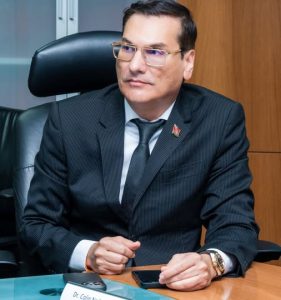

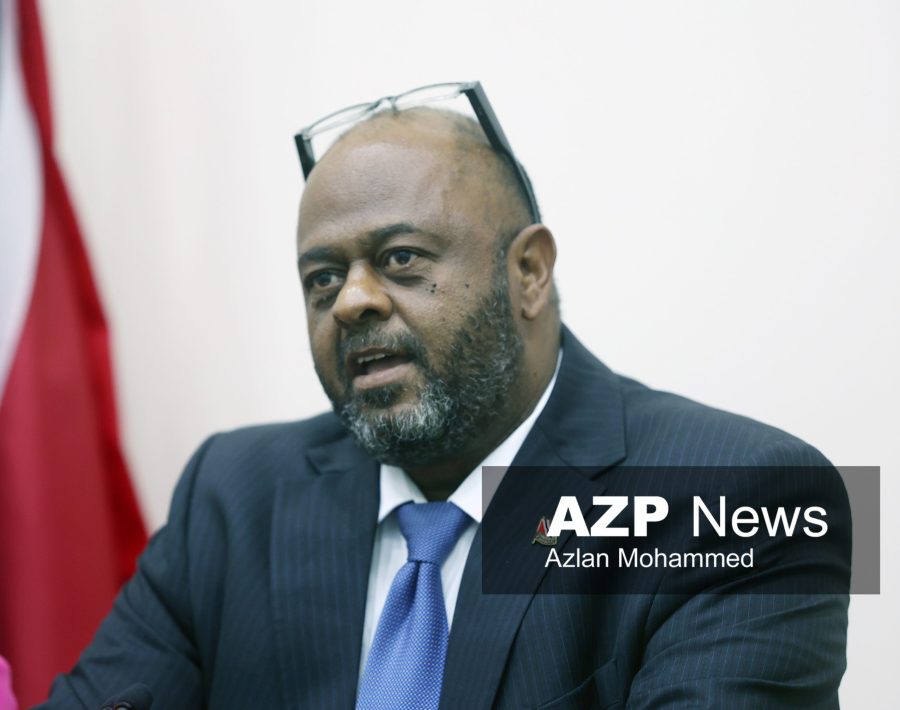
Caption: Wayne Sturge
Summary
- Defence Minister Wayne Sturge says a US-supplied radar system at ANR Robinson International Airport will remain in use for the “foreseeable future.”
- He argues the system—linked to drones and satellite communications—fills gaps in T&T’s limited radar coverage and Coast Guard capacity.
- Sturge refused to disclose how many US military personnel may be in the country, citing operational security and the public interest.
- He rejected concerns about sovereignty, framing US support as necessary assistance in a long fight against drug and gun trafficking.
- Government also signalled a push to strengthen maritime interception, including repaired Coast Guard vessels and plans for smaller patrol craft.
By Prior Beharry
DEFENCE Minister Wayne Sturge has defended the Government’s continued use of a United States–supplied radar system installed at the ANR Robinson International Airport in Tobago, saying the support will remain in place indefinitely as authorities intensify efforts to combat drug trafficking and gun smuggling.
Speaking at Thursday’s post-Cabinet media briefing, Sturge said Trinidad and Tobago already has a radar centre but described existing systems as limited. “We would have the use of the radar for the foreseeable future. I can’t give a definitive timeline,” he said.

Sturge said the US-provided system offers expanded surveillance capability, including integration with drone technology and satellite communications. He argued the enhanced detection is particularly important given constraints within the Coast Guard. With a fleet “not what it should be,” he said the radar support would help security forces respond faster and intercept traffickers more effectively.
Tensions rose when journalists pressed Sturge on whether US military personnel are present in the country and, if so, how many. The minister refused to disclose any figures, saying it would be “unwise” and not in the public interest, and questioned how the public would be served by that information.
When asked whether citizens had a right to know, Sturge challenged the premise. “You have a right to know? Where you get that right?” he said, arguing that the presence of foreign military personnel—if any—should be viewed in the context of national security rather than a loss of sovereignty.

Sturge said Trinidad and Tobago has faced a prolonged struggle against narcotics traffickers and linked the flow of drugs and guns to violent crime. “We have been at war since the 90s with narcotraffickers,” he said, adding that most murders are drug- and gang-related and typically involve firearms. He contended that disclosing troop numbers would effectively reveal operational strength to criminal networks.
Homeland Security Minister Roger Alexander also weighed in, suggesting it would be impractical to track the titles of the large number of visitors entering the country during the festive period. He said the country had welcomed thousands of visitors and that authorities were not focused on identifying who held what role.
Sturge said strengthening maritime interception remains a priority, reporting that several Coast Guard vessels have been repaired and returned to service. He added that the Government is seeking additional smaller patrol vessels aimed at intercepting high-speed boats used by traffickers, rather than acquiring large offshore patrol ships.
The radar—an AN/TPS-80 Ground/Air Task Oriented Radar (G/ATOR)—is a multi-mission air and missile surveillance system and Sturge said Trinidad and Tobago needs the system, but would not provide timelines.
“We would have the use of the radar for the foreseeable future, I can’t give a definitive timeline and the reason why we need it, we already have a radar centre but our radar systems are somewhat limited.
“The radar systems provided by the US, they work with drone technology and satellite communications and so on, so that it offers a lot more than what we have and that is needed at this point in time to achieve certain objectives…,” said Sturge. – with reporting from CMC