

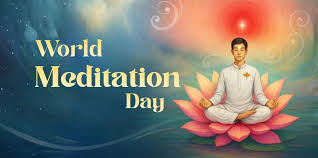
WHEN the United Nations designated 21st December as World Meditation Day, it affirmed what humanity has always known. The wellbeing of the mind is as important as the wellbeing of the body, and that peace within is a foundation for peace without. Meditation, often imagined as a modern self-help trend, is in fact one of the oldest continuous practices in human civilisation. Its journey spans ancient forests, royal courts, monastic traditions, and today’s digital apps. Yet, its purpose of inner strength, clarity and stability remains remarkably consistent
A brief history
The earliest documented references to meditation appear in the Vedas of ancient India, composed more than 3,500 years ago. These texts describe practices of concentrated attention, breath regulation, and inward contemplation known as dhyāna. By the 6th century BCE, these techniques formed part of the teachings of Gautama Buddha, who emphasised mindfulness and insight as pathways to liberation from suffering.
Meditation traditions also flourished in China, where Daoist sages used breathwork, stillness, and energy awareness to align themselves with the natural order, the Dao. In the centuries that followed, Buddhism reached China and blended with indigenous thought, giving rise to Chan (later Zen in Japan). Here meditation was valued for calmness, inner-control and experiential understanding beyond conceptual thinking.

In the Western world, contemplative practices emerged in ancient Greek philosophy. Thinkers like Pythagoras and Plato encouraged introspection as a means to moral clarity. Later, Christian monasticism cultivated hesychasm, which emphasised stillness and inner attention to achieve a direct experience of God’s uncreated light. Sufi mystics within the Islamic tradition developed muraqaba, a form of meditation focused on remembering the divine.
Despite cultural differences, these diverse traditions shared the recognition that the human mind, left unattended, becomes restless, reactive, and clouded. Meditation was the antidote, an intentional turning inward to restore balance.
A practical necessity
Modern life has amplified stresses that ancient practitioners could hardly have imagined. Urban density, digital overload, social comparison, financial pressures, and political turbulence create a mental environment in which many feel overstimulated and inwardly depleted. Global mental-health statistics reflect rising rates of anxiety, depression, burnout, and emotional exhaustion. In this context, meditation is no longer a spiritual luxury but a practical necessity.

At its core, meditation trains attention. It strengthens the ability to pause, observe, and respond consciously instead of reacting impulsively. The mind functions best when it is relaxed. Neuroscientific studies show that regular meditation can reduce the activity of the brain’s fear centre (the amygdala), increase emotional-regulation, and improve focus. These scientific findings echo what ancient practitioners understood, that the mind needs regular exercise of quietness and turning within to regulate and improve its function.
Shared humanity
Beyond individual wellbeing, meditation has societal value. A calmer mind contributes to better relationships, more thoughtful communication, and a deeper sense of shared humanity. In workplaces, meditation has been shown to reduce conflict and burnout while improving creativity. In schools, it helps children manage emotions and improve learning outcomes. In communities, it can soften polarisation by cultivating patience and understanding.
Moreover, today’s mental-health crisis highlights an important truth: people need inner resources as much as external ones. While therapy, medication, and support networks are vital, meditation offers a complementary tool accessible to anyone regardless of background, income, or belief system.

A healthy mind
A mind that benefits from regular meditation begins to show clear and observable capacities, much like the way a well-exercised body reflects vitality. A healthy mind has an ability to pause before reacting, allowing clarity to emerge instead of being overwhelmed by impulses. Such a mind becomes more stable, less easily shaken by external disturbances, and more capable of meeting challenges with calm discernment. Emotional turbulence gradually gives way to a balanced mood, where irritation and anxiety lose their intensity. There is a subtle rise in optimism: thoughts are less self-critical, more constructive and solution-oriented. The person listens better, empathize more naturally, and recover more quickly from stress. Above all, a meditative mind reflects an inner softness, a gentle confidence rooted not in circumstances but in self-awareness and peace. It is a mind that feels like a safe place to live in.
In supporting this UN observance, we honour a lineage of wisdom that spans thousands of years and we acknowledge that, today more than ever, meditation is one of the most practical gifts we can give to ourselves and the world.
Vijai Sadal is a student of the Brahma Kumaris Raja Yoga Meditation Centre. He can be reached at vijai@pepesmkt.com