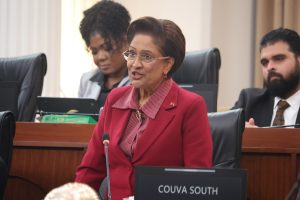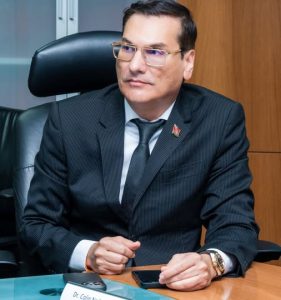


Caption: Chief Justice Ronnie Boodoosingh, right, and former chief justice Ivory Archie. Photo: T&T Judiciary
Summary
- Former chief justice Ivor Archie was honoured at a special Supreme Court sitting in Port of Spain on Friday.
- Appellate Judge Charmaine Pemberton acknowledged his tenure was described as ‘dogged by controversy’ but urged recognition of his ‘distinguished career.’
- Pemberton credited Archie with breaking barriers for magistrates, noting 13 were appointed as puisne judges since 2012, and cited efforts toward better gender balance.
- Chief Justice Ronnie Boodoosingh said Archie helped shape his career and led major modernisation, including Criminal Procedure Rules, e-filing and virtual hearings that aided courts during Covid-19.
- Speakers also referenced high-profile disputes during Archie’s tenure, including the Privy Council’s criticism of the JLSC’s handling of the Marcia Ayers-Caesar matter.
By Prior Beharry
DESPITE a tenure that was at times described as “dogged by controversy,” former chief justice Ivor Archie was lauded as a transformational leader during a special sitting of the Supreme Court in Port of Spain on Friday.
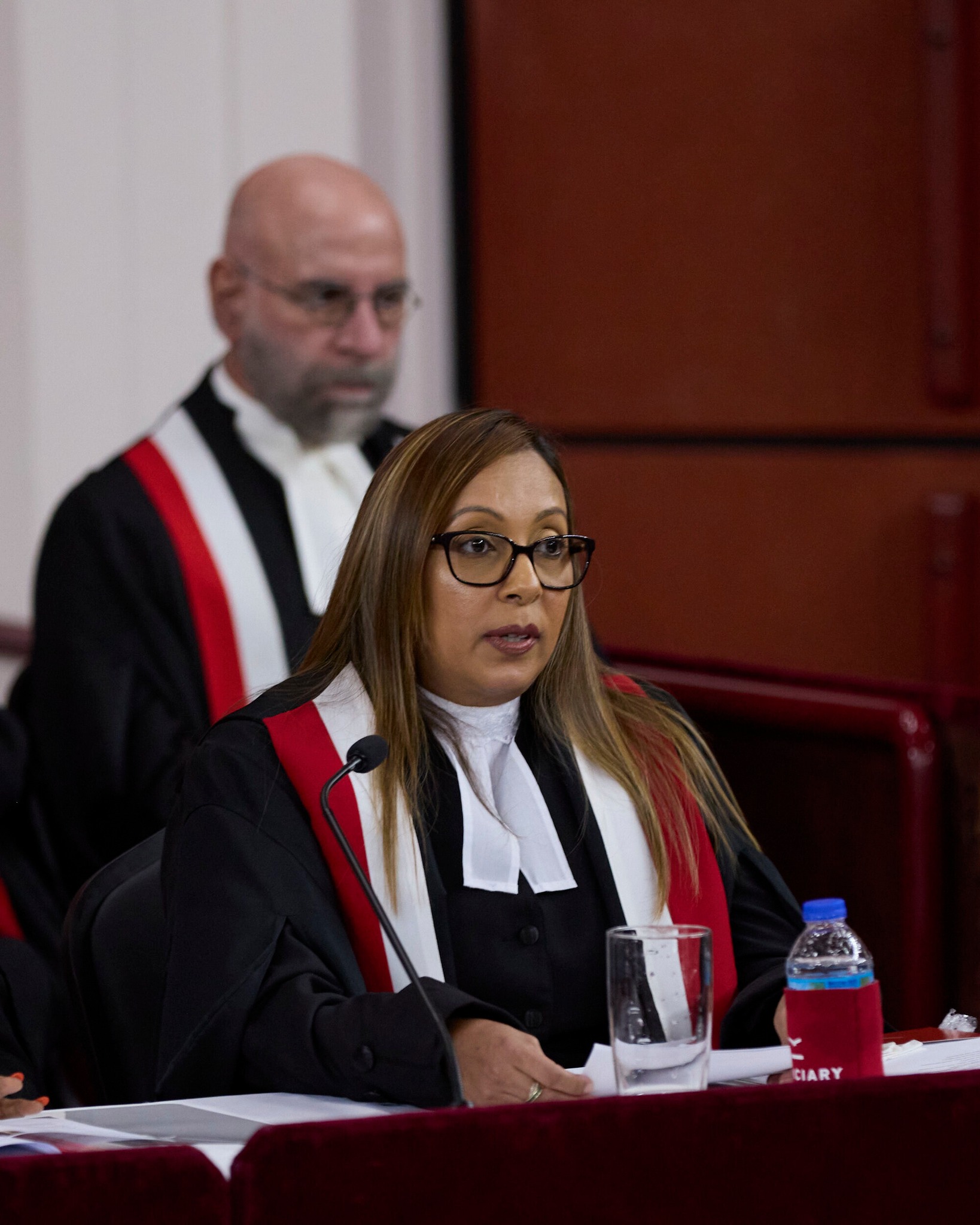
Appellate Judge Charmaine Pemberton, who sat with Archie in the Court of Appeal, told the ceremony at the Hall of Justice that public commentary on his tenure had often been harsh, citing an Express editorial that used the phrase “dogged by controversy.”
“Despite the apparent foreboding description, I remind us of the other side of what I call a distinguished career,” Pemberton said. She described Archie as a man of faith with a “deep and abiding love” for others, who often put “country, court, and family above his own comforts.”

Using a maritime metaphor, she credited him with steady leadership through difficult periods. “You guided the Judiciary through calm passages and turbulent storms… You neither abandoned the ship nor lost your bearing,” she said.
Pemberton also highlighted changes under Archie’s leadership, including the promotion of 13 magistrates to judges and efforts to improve gender balance among judicial officers.

“Between 1948 and 2012, two magistrates were appointed from the magisterial bench to the High Court bench as puisne judges—Justice Baird and Justice Persad,” she said. “The stigma associated with service in the magistracy has been prolonged… Thankfully, that glass ceiling was shattered. Since 2012, 13 puisne judges have been appointed from the magistracy.”
Ian Benjamin, SC, recalled representing Archie in litigation brought by former chief magistrate Marcia Ayers-Caesar, who alleged she was pressured to resign after being elevated to the High Court while she still had part-heard matters outstanding. The claim was initially dismissed in the High Court but later succeeded on appeal and ultimately before the UK-based Privy Council.

Benjamin said Archie faced criticism over the outcome but noted that even highly regarded judges can experience setbacks. “We all make mistakes,” he said, adding that Archie had “a bitter taste of defeat” at the apex court.
Chief Justice Ronnie Boodoosingh, who succeeded Archie in October last year, said Archie played a decisive role in his own career. He recalled that he was a temporary judge when Archie was appointed in 2008 and was later granted a permanent appointment.
“I personally therefore owe sincere thanks to him as the head of the Judicial and Legal Service Commission for his role in keeping me on the bench,” Boodoosingh said.

Boodoosingh also credited Archie with modernisation initiatives, including the introduction of Criminal Procedure Rules, the establishment of a specialised court for children, electronic court filings and the expansion of virtual hearings—changes he said helped the Judiciary function during and after the COVID-19 pandemic.
“I cannot count the ways in which his leadership has brought the Judiciary into the modern era,” he said, adding that the system’s ability to manage pandemic disruption was “a direct result of his foresight, leadership, and planning ahead.”
Responding to tributes—including from Justice Minister Devesh Maharaj and Law Association President Lynette Seebaran-Suite—Archie reflected on switching from engineering to law, saying he was driven by a “visceral hatred for injustice” and a belief that everyone deserved the chance to fulfil their potential.

He recalled two early experiences as a prosecutor—one involving a businessman accused of assaulting a dismissed employee, and another involving the sentencing of a juvenile offender—which he said helped shape his purpose.
Archie thanked judicial officers and staff for supporting the work of the courts, saying the institution’s strength was rooted in collective commitment rather than any one individual.
“I would miss the work a little bit, but I would miss the people even more,” he said. “I leave confident that the Judiciary remains in excellent hands.”
Background to controversies
Archie was appointed chief justice in 2008 at age 47. From 2017, allegations involving his personal associations and conduct triggered public calls for his resignation and a Law Association review of whether the claims could support action under Section 137 of the Constitution. After receiving advice from regional King’s Counsel, the association voted at a special general meeting to refer the matter to then prime minister Dr Keith Rowley, who declined to invoke Section 137 and later confirmed that decision in 2020.
The Privy Council also criticised the Archie-led Judicial and Legal Service Commission’s handling of the appointment and resignation of former chief magistrate Marcia Ayers-Caesar, finding that the “resign or face disciplinary proceedings” option amounted to unconstitutional coercion and improperly circumvented the process for removing a judge.