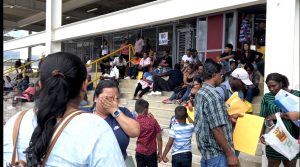


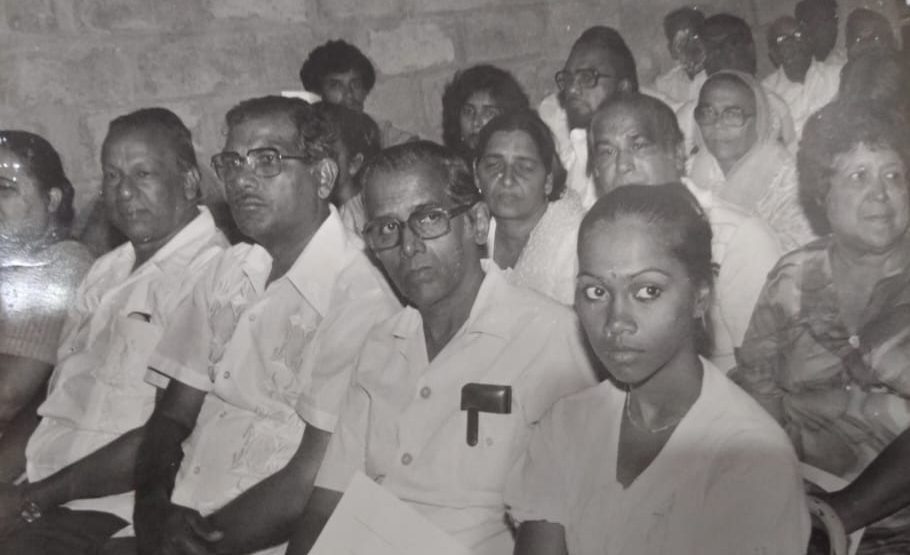
Caption: Meditation class in El Dorado, circa 1990
IN 2026, the Brahma Kumaris spiritual movement marks 50 years in the Caribbean.
It is a celebration of half a century of transformation, community building and spiritual education across diverse island nations.
Over these five decades, the Brahma Kumaris has brought to the Caribbean a spiritual vision and living practice that quietly changed countless lives.
At the heart of the organisation is a distinctive approach to spirituality and human development. Unlike many religious traditions that are infused with a hierarchical clergy, ritual or dogma, the Brahma Kumaris emphasise personal experience, self-realisation, and inner transformation.
Their teachings are rooted in the understanding that a human being is essentially a spiritual soul, not merely a physical body with a worldly identity. This shift to soul-consciousness, in self-perception, encourages individuals to transcend limiting labels like race, nationality, and social status, to realise the inherent goodness within themselves and others.

In 1975, during the International Year of Women, the Brahma Kumaris sisters were invited to Guyana. They were hosted at the home of the then Vice-President and his wife, Steve and Betty Narine. Early pioneers included sisters Mohini, Jayanti and Dr Hemlata. From Guyana the sisters fanned out across the Caribbean and to New York. In Trinidad, they found early support from Sat Maharaj, the Maha Sabha, the Moosais (Hardware), Gadraj Singh, the Sadals (Pepe’s Marketing) and many others whose charity and personal transformation helped to establish the movement.
Central to their offering is Raja Yoga meditation, a procedure that is simple and free of ritual. It can be practiced anywhere, at any time, and with one’s eyes open, making it particularly accessible in everyday life. The focus is on inner serenity, clarity of mind and conscious connection with a deeper source for peace and power. The practice teaches individuals to relax the mind and choose positive, constructive responses in the midst of life’s challenges.

Their teachings are not confined to any single religion or culture. They offer a practical framework that people of all backgrounds; Christian, Hindu, Muslim, secular, and others can engage with freely. Their meditation centers are open to all regardless of age, belief, class, or culture, and all courses and programmes are offered free of charge.

One of the early innovators, who still lives and serve here, Dr Hemlata Sanghi, dedicated her life to bringing these teachings to the West Indies. For her service in Trinidad, the President honored her with a National Award Gold Medal for the Development of Women during the Independence Day celebrations in 2014.
The movement’s roots in the region trace back to pioneering individuals from 25 Caribbean nations. In many of these countries, spiritual centers now serve as safe, open spaces for meditation, self-reflection, and community dialogue.

Brahma Kumaris centres offer a broad spectrum of community activities in the form of meditation sessions, spiritual classes, public talks, retreats, workshops and invitations to imbed and reflect our universal human values. Community members have been welcomed for decades to learn meditation and participate in courses that help people develop self-awareness, compassion, and emotional resilience.
Importantly, these offerings are inclusive. They are not limited to formal “membership” or religious adherence but are extended freely to anyone seeking clarity and guidance amidst life’s pressures.
An outreach to schools resulted in the creation of a values education programme and a short course in meditation offered through UWI.
There is engagement with women, fathers and youth groups. In collaboration with the Ministry of Education (Guyana) there is countrywide Positive Thinking Intervention that is impacting thousands. It started with primary and secondary head teachers, was extended to teachers and they are now beginning work with parents.
Service to prisoners is an outreach that is pursued across the Caribbean. In Trinidad, Sister Kay Narinesingh, another National Award recipient, created an art project that see inmates receive professional training in painting, alongside meditation.
Annually, the art pieces are exhibited and sold at the Long Circular Mall. Cash is then reinvested into paint and other training material, making the project self-sustaining. When released some prisoners continue their engagement in art to supplement their income. These outreach efforts reinforce the movement’s role as a contributor to the region’s ongoing efforts to promote stability and well-being.
At 50 years, the Brahma Kumaris in the Caribbean has ample reason to celebrate — not just the duration of their presence, but the depth and breadth of impact they have had on individuals and communities. Vijai Sadal is a student of the Brahma Kumaris Raja Yoga Meditation Centre. He can be reached at vijai@pepesmkt.com