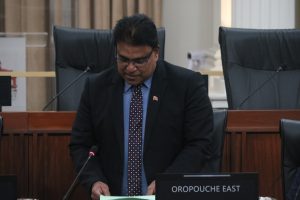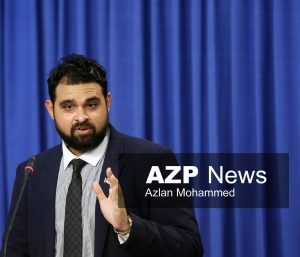


Caption: Umar Abdullah
A High Court judge has dismissed arguments that the decision by the police to prevent activist Umar Abdullah from burning a replica of the police flag during a protest in 2023 was arbitrary, unfair or a breach of natural justice.
Justice Kevin Ramcharan in his ruling noted that Abdullah, the leader of the non-government organisation, First Wave Movement, was interviewed by police before the decision was made by former police commissioner Erla Harewood-Christopher to refuse the activist the right to burn the flag during a protest against alleged police killings.

The judge said that the then commissioner in lawfully barring the burning of the Trinidad and Tobago Police Service (TTPS) flag, found that the restriction was a proportionate measure aimed at preventing a possible breach of the peace and did not unlawfully infringe constitutional rights to free expression, assembly or association.
Justice Ramcharan upheld the decision to approve Abdullah’s public march in Port of Spain but prohibited the burning of any item. Abdullah had applied for permission under the Summary Offences Act to march on October 28, 2023, to protest alleged extrajudicial killings by police.
He argued that burning the replica flag was a form of symbolic speech protected by the Constitution and that the police commissioner acted without evidence in restricting it.
But Justice Ramcharan rejected those arguments, ruling that the Summary Offences Act gives the commissioner discretion to impose conditions where an event “may occasion a breach of the peace or serious public disorder.”

The judge said that the High Court must give deference to the decision-maker unless the decision is shown to be irrational or based on irrelevant considerations.
“The apprehension that the burning of the flag may cause a breach of the peace or serious public disorder was within the ambit of the commissioner’s discretion,” Justice Ramcharan said in his ruling, noting the emotionally charged nature of the protest, the risks of igniting a fire in a densely urban area and the history of public disorder linked to protests involving burning objects.
“There is a possibility of serious public disorder and breach of the peace. The history of some protests, whether or not permission was granted, has culminated in violence after items were burned.
“I cannot allow the burning of an item, something that is violent in nature, to protest against extra-judicial killings, violent in nature. There were reasonable grounds for apprehending that the protest may occasion a breach of the peace. Igniting a fire in a public space has the potential to lead to violence, not necessarily by the claimant himself, but by those in attendance.”
Justice Rambacharn said that the High Court is of the view that igniting the replica flag of the TTPS in a densely urban area, in the presence of others, which may include family members and friends of victims of the extra-judicial killings and surrounding buildings, raises the possibility of an escalation to damage to infrastructure and injury to onlookers.
“Undoubtedly, the march would be an already emotionally charged event, which would be culminated by the igniting of the replica flag of the TTPS, the body allegedly responsible for the extrajudicial killings of their loved ones. It has the potential to incite violence.
“There is no guarantee that it would not lead to a breach of the peace and incite violence; equally, there is no guarantee that prohibiting it would prevent violence,” the judge said, noting also that the public-march provisions of the Summary Offences Act expressly operate notwithstanding constitutional rights to freedom of expression and assembly, provided any limitation is proportionate.
He noted that Abdullah was still allowed to march and protest near police headquarters, and that the restriction was narrowly tailored to public safety concerns.
“The defendant struck a fair balance between the claimant’s right, which was not wholly disturbed and the public interest to prevent breaches of the peace which may be likely to occur owing to the nature of the protest and the igniting of a fire that can cause injury and damage.” (CMC)