
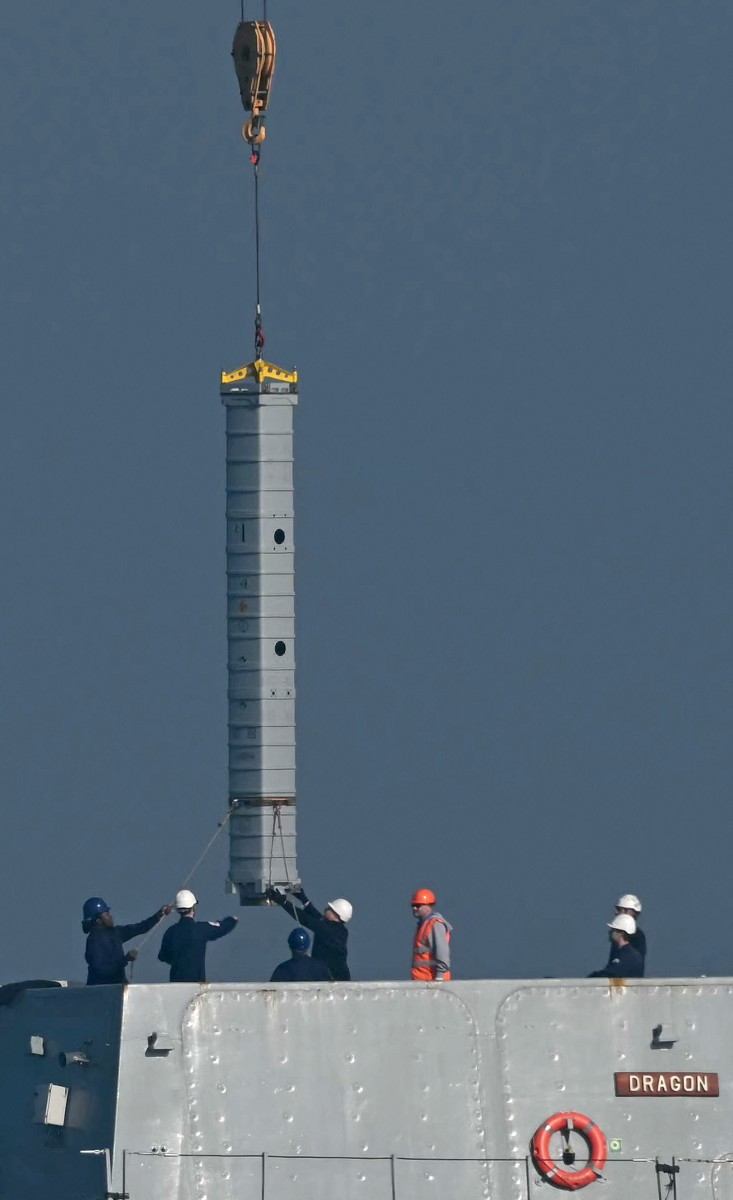
Caption: Goods are loaded onto HMS Dragon, a Royal Navy Type 45 Daring-class air-defence destroyer warship, moored at the HMNB Portsmouth Upper Harbour Ammunition Facility (UHFC), outside HM Naval Base Portsmouth, on the south coast of England, on March 4, 2026. AFP/Justin Tallis
Summary
- Keir Starmer defended his handling of the US-Israeli war against Iran after Donald Trump accused the UK of being ‘uncooperative’ over using British bases.
- Starmer said American planes are operating from UK bases and British jets are intercepting drones and missiles to protect US forces, framing this as the ‘special relationship in action.’
- Trump publicly criticized the UK, calling the relationship not what it used to be and accusing Britain of being slow to approve landings for US operations.
- Starmer acknowledged the request to use two British bases for a ‘specific and limited defensive purpose,’ a move that followed his earlier stance against regime change from the skies.
- The piece notes Starmer’s evolving stance on the alliance, his historically warm ties with Trump, and the broader political sensitivity in the UK surrounding any Middle East military action given Iraq War memories.
LONDON – Prime Minister Keir Starmer on Wednesday defended his handling of the US-Israeli war against Iran after President Donald Trump launched a scathing attack over the British leader’s initial refusal to allow the Americans to use UK air bases.
“American planes are operating out of British bases. That is the special relationship in action,” he told parliament.
“British jets are shooting down drones and missiles to protect American lives in the Middle East on our joint bases. That is the special relationship in action, sharing intelligence every day to keep our people safe,” he said.
“Hanging on to President Trump’s latest words is not the special relationship,” he added.

Trump described the historical relationship between the US and Britain as “not like it used to be” in an interview published Tuesday.
Hours later he stepped up his criticism saying “this is not Winston Churchill that we’re dealing with”.
“The UK has been very, very uncooperative,” he said while seated next to German Chancellor Friedrich Merz at the White House.
“I’m not happy with the UK,” he said. “It’s taken three, four days for us to work out where we can land.”
Starmer — who told parliament on Monday his government “does not believe in regime change from the skies” — drew Trump’s wrath by initially refusing to have any role in Washington’s war with Iran.

He later agreed to a US request to use two British military bases for a “specific and limited defensive purpose”.
Starmer has cultivated a warm relationship with the unpredictable Trump, who was given an unprecedented second state visit to Britain last year.
The so-called special relationship between the World War II allies is largely built on long-standing defence cooperation and intelligence sharing.
But any potential military action in the Middle East is politically sensitive in the UK following former prime minister Tony Blair’s disastrous support for the US-led invasion of Iraq in 2003. (AFP)